
Urologist in Delhi NCR (South Delhi): Kidney Stone and Prostate Surgery at THE CLINICS
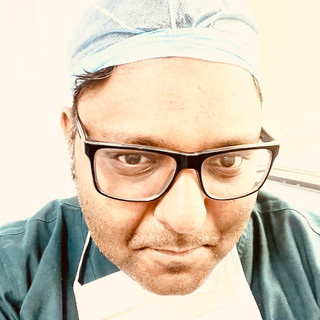
If you are looking for a urologist in Delhi NCR, THE CLINICS in Hauz Khas, South Delhi, offers consultation and surgery for kidney and ureteric stones, bladder stones, an enlarged prostate and other urinary problems. Urology care is led by Dr Bipul Agarwal, urologist, andrologist and kidney transplant surgeon (DMC Reg. No. 81020). This guide explains which problems a urologist treats, the procedures offered here (PCNL, RIRS, URS, laser lithotripsy, cystolitholapaxy, TURP and HoLEP), what kidney stone surgery costs, and how to book.
Urologist in South Delhi: timings and location
Doctor: Dr Bipul Agarwal, urologist, andrologist and kidney transplant surgeon, DMC Reg. No. 81020
OPD: THE CLINICS MISC, H2, Hauz Khas Main Road, opposite Neeli Masjid, New Delhi 110016
Timings: Tuesday, Thursday and Saturday, 6–8 pm (please call to confirm before you come)
Surgery: THE CLINICS MISC, Hauz Khas
Languages: Hindi, English, Bengali and Kannada
Consultation fee: ₹1,500 + ₹100 registration. Insurance facilities available.
Patients come from Hauz Khas, Green Park, Safdarjung, Saket, Malviya Nagar, Vasant Kunj, Lajpat Nagar and the rest of South Delhi, as well as Gurugram, Noida, Faridabad and Ghaziabad. Patients from other cities can share reports on WhatsApp before travelling.
When should you see a urologist?
A urologist treats the kidneys, ureters, bladder, prostate and urethra, and the male reproductive organs. See a urologist if you have:
Pain in the side or back that comes in waves, often spreading to the groin (a possible kidney or ureteric stone)
Blood in the urine, even once and even without pain
Burning, frequent urination or repeated urine infections
A weak stream, straining, dribbling or getting up at night to pass urine (common with an enlarged prostate)
Not being able to pass urine at all (urinary retention)
Leakage of urine
A raised PSA blood test or a hard prostate on examination
Erection problems or difficulty conceiving (male infertility)
Read more in when should you consult a urologist in Delhi NCR and how to prepare for your first urologist visit.
About Dr Bipul Agarwal
Dr Bipul Agarwal is a urologist, andrologist and kidney transplant surgeon with a special interest in endourology (operations done through the urinary passage with telescopes and lasers) and reconstructive urology. He manages kidney, ureteric and bladder stones, an enlarged prostate, urethral stricture, urinary incontinence, male infertility and sexual health problems. He explains the options, the reasons for and against surgery, and the expected recovery before any procedure is planned.
Kidney and ureteric stones: PCNL, RIRS, URS and laser lithotripsy
Small stones often pass with water, medicines and time. Surgery is advised when a stone is too large to pass, keeps causing pain, blocks the kidney or causes infection. A CT KUB scan shows the size, number and position of the stones, and decides which operation suits you. See kidney stone surgery in Delhi and ureteric stone surgery.
RIRS (retrograde intrarenal surgery): a thin flexible telescope is passed through the urinary passage up into the kidney, and the stone is broken with a laser. No skin cut. Often chosen for kidney stones up to about 2 cm.
URS (ureteroscopy): a telescope is passed into the ureter, the tube between the kidney and the bladder, and the stone is broken with a laser or removed. No skin cut. Used for stones stuck in the ureter.
Laser lithotripsy: the holmium or thulium laser used in RIRS and URS (and sometimes in PCNL) to break stones into dust or small pieces, which are washed out or removed.
PCNL (percutaneous nephrolithotomy): a keyhole of about 1 cm is made in the back, and the stone is broken and removed through a tube. Usually chosen for stones larger than about 2 cm, staghorn stones and hard stones.
Stent: a soft plastic tube between the kidney and the bladder is often left for one to three weeks after RIRS or URS, and removed in a short day-care procedure.
Read how RIRS or PCNL is chosen, recovery after laser surgery for a kidney stone and will you need a stent.
Bladder stones: cystolitholapaxy
Bladder stones often form when the bladder does not empty fully, for example because of an enlarged prostate or a narrow urethra. In cystolitholapaxy, a telescope is passed into the bladder through the urinary passage, the stone is broken with a laser or a stone punch, and the pieces are washed out. There is no cut on the skin. If an enlarged prostate is the cause, it may be treated in the same sitting so that stones are less likely to form again.
Enlarged prostate (BPH): TURP and HoLEP
An enlarged prostate is common in men over 50. Symptoms include a weak stream, straining, a feeling that the bladder has not emptied, and passing urine often at night. Many men do well with lifestyle changes and medicines. Surgery is advised when medicines do not help, or if there is urinary retention, repeated infection, bladder stones, bleeding or kidney damage. See enlarged prostate (BPH) treatment in South Delhi.
TURP (transurethral resection of the prostate): the blocking part of the prostate is removed through the urinary passage with an electric loop. No skin cut. A catheter usually stays for one to three days. See TURP prostate surgery in Delhi.
HoLEP (holmium laser enucleation of the prostate): a laser separates the enlarged inner part of the prostate from its capsule, and the tissue is removed through the urinary passage. It suits a wide range of prostate sizes, including large glands, and bleeding is usually less.
Read TURP or HoLEP: how the choice is made and how to choose a urologist for prostate symptoms in Delhi NCR.
Raised PSA and prostate cancer checks
A raised PSA blood test does not always mean cancer; infection and an enlarged prostate can raise it too. The usual steps are a repeat PSA, an examination of the prostate, an MRI of the prostate and, if needed, a biopsy. If cancer is found, the options depend on the stage and your general health, and include active surveillance, surgery, radiotherapy and hormone therapy. Warning signs that need prompt review include blood in the urine or semen, bone pain and an unexplained raised PSA.
Other urology problems treated
Urine infections that keep coming back
Blood in the urine (haematuria): tests to find the cause
Urethral stricture (narrowing of the urinary passage)
Urinary incontinence (leakage)
Male infertility and erection problems (andrology)
Kidney transplant assessment and counselling
Kidney stone surgery cost at THE CLINICS
Kidney stone surgery at THE CLINICS is offered as an all-inclusive package of about ₹1,00,000 to ₹2,00,000. This is an all-inclusive package covering the surgery, hospital stay and standard consumables. A final quotation is given once the doctor has examined the patient. The package depends on the type of procedure (RIRS, URS or PCNL) and the kind of surgery needed: the size, number and position of the stones, whether a stent is placed, and whether more than one session is needed. Insurance facilities available.
For TURP, HoLEP, cystolitholapaxy and other procedures, THE CLINICS offers all-inclusive packages covering the surgery, hospital stay and standard consumables. The package is quoted after the consultation and tests, because it depends on the prostate size or stone burden, the length of stay and the room category. See insurance and costs.
What happens at your first visit?
Bring all reports: ultrasound, CT KUB, urine tests, PSA, kidney function (creatinine) and earlier discharge summaries
Bring a list of your medicines, especially blood thinners and diabetes medicines
The urologist takes your history, examines you and may ask for a urine test, ultrasound with residual urine, uroflowmetry or a CT scan
You hear the options, including whether surgery is needed now, can wait or is not needed
If surgery is advised, you get a written estimate and a date
Coming from outside Delhi?
Share your CT KUB, ultrasound or PSA reports on WhatsApp before travelling, so that Dr Bipul Agarwal can say whether a procedure is likely and which tests to bring. Most patients can travel by road a day or two after RIRS, URS or TURP, and a few days after PCNL or HoLEP, as advised. Stent removal and follow-up can be planned around your travel.
When to go to a hospital urgently
Go to the nearest hospital without delay for kidney stone pain with fever or chills, pain that does not settle with medicines, repeated vomiting, very little or no urine, or heavy blood in the urine with clots. These can mean a blocked, infected kidney or urinary retention.
Frequently asked questions about seeing a urologist in Delhi NCR
Where can I see a urologist in South Delhi?
Dr Bipul Agarwal, urologist (DMC Reg. No. 81020), sees patients at THE CLINICS MISC, H2, Hauz Khas Main Road, opposite Neeli Masjid, New Delhi 110016, on Tuesday, Thursday and Saturday, 6–8 pm. Call +91 92173 81353 to book.
What is the urologist consultation fee?
₹1,500 + ₹100 registration.
What is the cost of kidney stone surgery in Delhi?
At THE CLINICS, kidney stone surgery is offered as an all-inclusive package of about ₹1,00,000 to ₹2,00,000, depending on the type of procedure and the kind of surgery needed. This is an all-inclusive package covering the surgery, hospital stay and standard consumables. A final quotation is given once the doctor has examined the patient. Insurance facilities available.
Which kidney stone operations are done at THE CLINICS?
RIRS and URS with laser lithotripsy, and PCNL for larger stones. Bladder stones are treated by cystolitholapaxy.
What is the difference between RIRS and PCNL?
RIRS reaches the kidney through the urinary passage with a flexible telescope and a laser, with no skin cut. PCNL uses a keyhole of about 1 cm in the back and is usually chosen for stones larger than about 2 cm.
Which surgery is used for an enlarged prostate?
TURP and HoLEP are both done through the urinary passage without a skin cut. The choice depends on the prostate size, your health and other conditions, and is explained at the consultation.
Do all men with an enlarged prostate need surgery?
No. Many do well with lifestyle changes and medicines. Surgery is advised when medicines do not help or there is retention, infection, bladder stones, bleeding or kidney damage.
Is urology surgery covered by insurance?
Most medically needed urology operations are covered, subject to policy terms and waiting periods. Insurance facilities available at THE CLINICS.
Can I send my reports before visiting?
Yes. Share your reports on WhatsApp at +91 92173 81353 so the team can tell you what else to bring.
Does THE CLINICS have an emergency department?
No. For severe pain with fever, inability to pass urine or heavy bleeding, go to the nearest hospital or call 112.
यूरोलॉजिस्ट से जुड़े सवाल (हिंदी में)
साउथ दिल्ली में यूरोलॉजिस्ट कहाँ दिखाएँ?
डॉ. बिपुल अग्रवाल (यूरोलॉजिस्ट, DMC 81020) THE CLINICS MISC, H2 हौज़ ख़ास मेन रोड, नीली मस्जिद के सामने, नई दिल्ली 110016 में मंगलवार, गुरुवार और शनिवार शाम 6 से 8 बजे तक देखते हैं। अपॉइंटमेंट के लिए +91 92173 81353 पर कॉल करें।
गुर्दे की पथरी के ऑपरेशन का खर्च कितना है?
THE CLINICS में किडनी स्टोन सर्जरी का खर्च लगभग ₹1,00,000 से ₹2,00,000 तक है, जो प्रक्रिया के प्रकार और ज़रूरी सर्जरी पर निर्भर करता है। यह ऑल-इन्क्लूसिव पैकेज है, जिसमें सर्जरी, अस्पताल में रहना और सामान्य कंज़्यूमेबल्स शामिल हैं। डॉक्टर द्वारा जांच के बाद अंतिम कोटेशन दिया जाता है। बीमा सुविधा उपलब्ध है।
प्रोस्टेट बढ़ने का इलाज क्या है?
बहुत से पुरुषों को दवाओं से आराम मिल जाता है। ज़रूरत पड़ने पर TURP या HoLEP ऑपरेशन किया जाता है, जिसमें त्वचा पर कोई चीरा नहीं लगता।
डॉक्टर की फीस कितनी है?
परामर्श शुल्क ₹1,500 + ₹100 पंजीकरण।
Book a consultation
Call the desk on +91 92173 81353 or +91 83683 75734, or WhatsApp +91 92173 81353. Consultation fee: ₹1,500 + ₹100 registration. Insurance facilities available.
THE CLINICS MISC, H2, Hauz Khas Main Road, opposite Neeli Masjid, New Delhi 110016 (surgery and OPD)
THE CLINICS Green Park, G-32, Green Park Main Market Road, New Delhi (OPD)
THE CLINICS has no emergency department. In an emergency, go to the nearest hospital or call 112.
This article was prepared with AI assistance for review by Dr Bipul Agarwal, urologist (DMC Reg. No. 81020). It is general information and not a substitute for medical advice.


