

VABB for Gynaecomastia: Can Male Breast Tissue Be Removed Through a Tiny Incision?
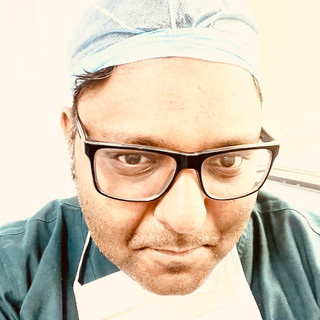
Medically reviewed by Dr Gopal Puri, breast, endocrine and general surgeon (DMC Reg. No. 21499), THE CLINICS. Last reviewed 18 November 2026.
For many men with gynaecomastia, the problem is not simply physical.
It may affect the clothes they wear, how comfortable they feel at the gym, whether they remove their shirt at the pool, or simply how confident they feel about their chest.
Traditional gynaecomastia surgery works very well, but it usually involves liposuction, surgical removal of glandular tissue through an incision around the areola, or a combination of the two.
For selected patients, however, there may be another option.
Vacuum-Assisted Breast Biopsy, or VABB, can be used to remove glandular breast tissue through a very small skin incision in carefully selected cases of gynaecomastia.
It is a minimally invasive technique that was originally developed for breast biopsy and removal of benign breast lesions, but has also been studied as a treatment for gynaecomastia.
What is gynaecomastia?
Gynaecomastia is enlargement of glandular breast tissue in a boy or man.
It may affect one side or both sides and can appear as a firm or rubbery disc of tissue beneath the nipple.
It is important to distinguish true gynaecomastia from pseudogynaecomastia, where chest enlargement is mainly caused by excess fatty tissue.
Many patients have a combination of both gland and fat.
The treatment therefore depends on what is actually producing the chest enlargement.
Why does gynaecomastia happen?
Gynaecomastia develops when there is an imbalance between the effects of oestrogen and testosterone on breast tissue.
Possible causes include:
Puberty
Age-related hormonal changes
Certain medicines
Anabolic steroids or bodybuilding hormones
Liver or kidney disease
Thyroid disease
Reduced testosterone levels
Significant weight gain
Certain endocrine disorders
In many men, however, no definite cause is identified.
Before considering surgery, the aim should always be to establish whether there is a reversible underlying reason.
What is VABB?
VABB stands for Vacuum-Assisted Breast Biopsy.
Despite the word “biopsy,” the device can remove considerably more tissue than a conventional needle biopsy.
Under imaging guidance, a special vacuum-assisted probe is introduced through a small incision. The probe draws tissue into a sampling chamber and removes it progressively.
Instead of making a larger incision around the nipple and removing the gland as one piece, the glandular tissue can be removed in multiple small fragments through the probe.
The tissue is then sent for pathological examination.
How can VABB be used for gynaecomastia?
In carefully selected men with a predominantly glandular component, the vacuum-assisted probe can be positioned beneath the nipple and used to progressively remove the enlarged gland.
The procedure may be combined with liposuction when excess fat is also contributing to the chest contour.
One published series used vacuum-assisted excision together with liposuction in men with grade I and II gynaecomastia. Most patients reported high satisfaction, although some required further treatment for residual tissue.
Another retrospective study comparing traditional surgery with vacuum-assisted treatment reported significantly smaller scars and shorter hospital stays in the VABB group, with good cosmetic satisfaction. However, this was a relatively small observational study rather than a large randomised trial.
More recent work has also explored vacuum-assisted gland removal combined with power-assisted liposuction for mixed-type gynaecomastia.
What is the main advantage of VABB?
The biggest attraction is the small skin incision.
Traditional gynaecomastia surgery commonly requires direct excision of glandular tissue through an incision placed along the edge of the areola. When excess fat is present, liposuction may be added. Larger-volume gynaecomastia or loose skin can require more extensive surgery.
With VABB, the access incision can be much smaller and can sometimes be placed away from the nipple.
Potential advantages in selected patients include:
Smaller visible scar
Minimally invasive access
Removal of glandular breast tissue
Tissue available for pathological examination
Potentially faster recovery
Good cosmetic outcome in appropriately selected cases
But this does not mean VABB is the right operation for every patient with gynaecomastia.
Who may be suitable for VABB?
VABB is most attractive when there is:
Mild to moderate gynaecomastia
A significant glandular component
Relatively limited excess skin
A well-defined retroareolar gland
No suspicious breast finding
Strong preference for minimising visible scarring
Patient selection is important.
A man with very large breasts, significant skin excess or marked nipple descent may need conventional surgery because removing gland alone will not correct the loose skin or nipple position.
Similarly, if chest enlargement is predominantly fat rather than gland, liposuction may be more useful.
Who may not be suitable?
VABB may not be the appropriate treatment when there is:
Significant loose or hanging skin
Severe gynaecomastia
Need for nipple repositioning
A very large volume of glandular tissue
A suspicious breast lump
Bloody nipple discharge
Skin or nipple retraction
A clinical or imaging concern for male breast cancer
A suspicious male breast lesion should be investigated as a diagnostic problem rather than assumed to be routine gynaecomastia.
VABB vs liposuction: what is the difference?
This is an important distinction.
Liposuction removes fat.
VABB removes glandular breast tissue.
If the chest enlargement is mainly fatty, liposuction may be sufficient.
If there is a firm gland beneath the nipple, liposuction alone may leave that gland behind.
Some men therefore require:
VABB alone
or
VABB + liposuction
depending on the proportion of gland and fat.
Traditional surgery similarly uses excision, liposuction or both depending on the anatomy.
VABB vs conventional gynaecomastia surgery
Feature | VABB | Conventional excision |
|---|---|---|
Skin incision | Very small | Usually around the areola |
Gland removal | Through vacuum-assisted probe | Direct surgical excision |
Liposuction | Can be added | Frequently added |
Tissue for pathology | Yes | Yes |
Large-volume gland | Less suitable | More versatile |
Recovery after VABB
After VABB for gynaecomastia, bruising and swelling are common and usually settle over the following days to weeks. A compression garment is often advised for a period decided by the surgeon.
Many men can return to desk work sooner than after more extensive chest surgery, but this varies from person to person. Heavier exercise, gym training and contact sport are usually postponed until the surgeon agrees. The removed tissue is sent for pathological examination. Your own aftercare plan should come from the consultation, not from a general article.
Possible risks and side effects
As with any procedure that removes tissue, possible side effects include bruising, a haematoma (a collection of blood under the skin), residual glandular tissue, contour irregularity, and the need for further treatment. Other possible problems include infection, delayed healing and a change in nipple sensation. A small scar remains at the incision.
These risks are discussed at consultation so that the plan can be matched to your anatomy.
When to see a surgeon, and what evaluation is needed
Before any treatment, a surgeon needs to confirm that the enlargement is true gynaecomastia rather than mainly fat, and to look for a reversible cause.
Assessment usually includes a clinical examination and, where indicated, an ultrasound of the chest. Blood tests for hormones, and further tests such as liver, kidney or thyroid function, may be advised depending on the history.
A suspicious lump, bloody nipple discharge, or skin or nipple retraction should be investigated as a diagnostic problem, not assumed to be routine gynaecomastia.
At THE CLINICS, consultations for breast conditions are with Dr Gopal Puri, breast, endocrine and general surgeon, at THE CLINICS Green Park. Surgery, when advised, is done at THE CLINICS MISC, Hauz Khas. See also breast surgery at THE CLINICS.
Cost of VABB and gynaecomastia treatment
THE CLINICS does not list a fixed package price for VABB or gynaecomastia surgery on the website. The cost depends on whether one or both sides are treated, whether liposuction is added, the type of anaesthesia and the facility plan.
Get a free written quote: WhatsApp or call +91 92173 81353, or book online at THE CLINICS Green Park (+91 84488 30013) or Hauz Khas (+91 92173 81353).
Related pages
Frequently asked questions
What is VABB for gynaecomastia?
VABB (vacuum-assisted breast biopsy) can be used, in carefully selected cases, to remove glandular male breast tissue through a small skin incision. The tissue is sent for pathological examination. It may be combined with liposuction when excess fat is also present.
Does gynecomastia surgery leave scars? Is VABB scarless?
No procedure that uses an incision is scarless. VABB uses a very small skin incision, which may leave a small scar, sometimes placed away from the nipple. Conventional excision usually uses an incision around the areola.
How much does gynecomastia surgery cost in Delhi?
Costs vary with the amount of gland and fat, whether one or both sides are treated, whether liposuction is added, and the facility plan. THE CLINICS does not list a fixed package price for this procedure on the website. After examination you can get a free written quote by WhatsApp or phone on +91 92173 81353.
What is the difference between VABB and liposuction for gynaecomastia?
Liposuction removes fat. VABB removes glandular breast tissue. If the chest enlargement is mainly fatty, liposuction may be sufficient. If there is a firm gland beneath the nipple, liposuction alone may leave that gland behind. Some men need VABB alone, or VABB with liposuction.
How long is recovery after VABB for gynaecomastia?
Bruising and swelling are common and usually settle over days to weeks. A compression garment is often advised. Return to desk work and exercise varies; heavier training is typically delayed until the surgeon agrees.
Who is suitable for VABB gynaecomastia treatment?
VABB is most often considered for mild to moderate gynaecomastia with a significant glandular component, relatively limited excess skin, and no suspicious breast finding. Men with very large breasts, significant loose skin, or a need for nipple repositioning may need conventional surgery.
Book a consultation
Dr Gopal Puri is a breast, endocrine and general surgeon (DMC Reg. No. 21499), with 7+ years in practice. His qualifications, as listed on the doctors page at THE CLINICS, are MBBS, MS, MCh – Breast, Endocrine – AIIMS, New Delhi; Fellowship in Breast Surgery – European Board of Surgery (FEBS); and FCLS (Fellow) – Fellow of College of Laparoscopic Surgeons.
He consults at THE CLINICS Green Park, Monday to Saturday, 6–8 pm, by appointment, and operates at THE CLINICS MISC, Hauz Khas.
Consultation fee: ₹1,500 + ₹100 registration.
To book a consultation with Dr Gopal Puri: call or WhatsApp +91 92173 81353, call Green Park on +91 84488 30013, or book online.
THE CLINICS Green Park (OPD): G-32, Ground Floor, Green Park Main Market Road, New Delhi 110016. Surgery: THE CLINICS MISC, H-2, Hauz Khas Main Road, opposite Neeli Masjid, New Delhi 110016. Clinic hours: Monday to Saturday, 9 am–9 pm.
Reviewed by Dr Gopal Puri, breast, endocrine and general surgeon, DMC Reg. No. 21499. Last reviewed 18 November 2026. General information only; it does not replace a consultation.


