

Achalasia Cardia Treatment in South Delhi: Symptoms, Types, Tests and Options
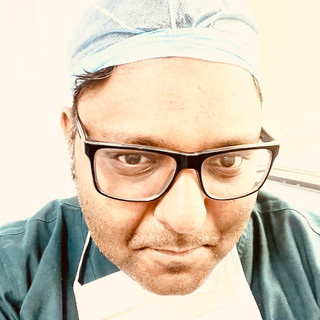
Medically reviewed by Dr Saurabh Bansal, GI, Advanced Laparoscopic & Colorectal Surgeon (DMC Reg. No. 37887), THE CLINICS. Last updated: 27 November 2026.
Achalasia cardia treatment aims to fix one problem: a valve at the lower end of the food pipe that will not open. If food and even water seem to stick in your chest, or you bring food back up hours after eating, achalasia is one possible cause.
This guide explains achalasia cardia in plain words: the symptoms, the types, the tests that confirm it, and the treatment options, from medicines and endoscopic treatments to keyhole surgery. At THE CLINICS MISC, Hauz Khas, a 6-bed DGHS-approved facility, THE CLINICS team led by Dr Saurabh Bansal performs laparoscopic Heller myotomy with fundoplication for achalasia.
Table of contents
What is achalasia cardia?
"Achalasia" means "failure to relax", and the "cardia" is where the food pipe (oesophagus) joins the stomach. In achalasia cardia, nerve cells in the wall of the oesophagus are gradually lost, probably because the immune system attacks them, sometimes after a viral infection. Two things go wrong:
The lower oesophageal sphincter, the valve at the bottom, stays tight
The squeezing waves that push food down fade away
Achalasia is uncommon: roughly 1 in 100,000 people develop it each year. It affects men and women equally, most often between 25 and 60 years of age, but it can start at any age.
What are the symptoms of achalasia cardia?
Food and liquids feel stuck in the chest; many people drink water, stand up or walk to push food down
Regurgitation of undigested food or frothy saliva, often at night, with stains on the pillow
Chest pain, which can be mistaken for heart pain or acidity
A burning feeling that does not improve with antacids
Eating slowly, avoiding meals in company, and weight loss
Night-time cough, a hoarse voice or repeated chest infections
Doctors often grade these with the Eckardt score, which adds up swallowing difficulty, regurgitation, chest pain and weight loss. It is used to judge severity and to check progress after treatment.
How is achalasia cardia diagnosed?
Upper GI endoscopy: a thin camera looks at the oesophagus and stomach. It may look nearly normal early on, but it is essential to rule out a growth near the stomach that can mimic achalasia. Endoscopy is done at THE CLINICS MISC, Hauz Khas.
Barium swallow: X-ray pictures after a contrast drink show a widened oesophagus that tapers like a "bird's beak". A timed barium swallow also shows how slowly it empties.
High-resolution manometry (HRM): a thin tube passed through the nose measures pressure along the oesophagus. It is the key test that confirms achalasia and shows its type.

What are the types of achalasia?
The Chicago Classification version 4.0 (2021), the international standard for reading manometry, describes three types:
Type | What manometry shows | Usual approach |
Type I (classic) | Tight valve, no squeezing in the oesophagus | Heller myotomy, POEM or balloon dilation |
Type II | Tight valve with pressure across the whole oesophagus | Responds well to all three main treatments |
Type III (spastic) | Tight valve with strong, uncoordinated contractions | POEM is often preferred because a longer muscle cut is possible |
What are the treatment options for achalasia cardia?
Treatment cannot bring back the lost nerves, but it can open the valve so food passes. The ACG (2020) and ISDE (2018) guidelines suggest choosing among three main treatments based on your achalasia type, age, health and preference:
Pneumatic dilation: during endoscopy, a balloon is inflated inside the valve to stretch it. It is day-care, may need repeat sessions, and carries a small risk of a tear.
POEM (per-oral endoscopic myotomy): the valve muscle is cut from inside through an endoscope. There are no skin cuts, but acid reflux afterwards is more common.
Laparoscopic Heller myotomy with partial fundoplication: keyhole surgery to cut the valve muscle, with a loose stomach wrap to reduce reflux.
Medicines such as nifedipine, and Botox injections into the valve, give short-term relief. They are mainly used for people who are too frail for other options.

How is laparoscopic Heller myotomy with fundoplication done at THE CLINICS?
In this operation, done under general anaesthesia through small cuts on the abdomen, the surgeon divides the tight muscle at the lower oesophagus and upper stomach while keeping the inner lining intact. A partial wrap is then made from the upper part of the stomach: a Dor wrap over the front, or a Toupet wrap around the back.
Why add a wrap? Once the valve is opened, acid can flow back up. A partial wrap reduces reflux without blocking swallowing, which a full Nissen wrap could do in an oesophagus that cannot squeeze well. If a hiatus hernia is present, it is repaired at the same time. For a step-by-step guide, read laparoscopic Heller myotomy with fundoplication on Dr Saurabh Bansal's website, and Nissen vs Toupet fundoplication for how wraps differ.
What is recovery and diet like after achalasia surgery?
The hospital stay is usually 1 to 2 days
Liquids come first, then soft food such as dal, khichdi, curd, porridge and mashed vegetables for about two weeks
Eat small meals slowly, sit upright and chew well; avoid dry bread, tough meat and fizzy drinks at first
Desk work is usually possible in 1 to 2 weeks; avoid heavy lifting for about 4 to 6 weeks
Follow-up visits check swallowing and reflux

What are the risks and the long-term follow-up after achalasia treatment?
Every option has risks. With surgery, these include a small hole in the oesophageal lining (usually repaired during the operation), reflux, swallowing difficulty that persists or returns, bleeding and infection. People with long-standing achalasia have a higher than average risk of oesophageal cancer, so new or worsening swallowing trouble, weight loss or bleeding should be reported without delay.
When to see a doctor
Swallowing difficulty lasting more than a few weeks, especially with liquids too
Bringing back undigested food
Weight loss without trying, or chest pain while eating
Choking or coughing at night
Chest pain can also come from the heart. If it is severe or comes with breathlessness or sweating, go to the nearest emergency department or call 112.
Frequently asked questions
Can achalasia cardia be treated permanently?
The lost nerves do not recover, so achalasia is a lifelong condition. Treatment opens the valve, and many people swallow far more comfortably afterwards. Some need further treatment years later.
Can achalasia be treated with medicines alone?
Medicines relax the valve only briefly and often cause headaches. They are used when other treatments are not possible.
What is the difference between achalasia and GERD?
In GERD the valve is too loose and acid comes up; in achalasia the valve is too tight and food cannot go down. Both can cause chest burning, so tests are needed. Read about GERD surgery in South Delhi.
Should I choose POEM or Heller myotomy?
It depends on your achalasia type, age, earlier treatment and how much reflux matters to you. Type III often suits POEM; types I and II do well with either.
Is achalasia surgery covered by insurance?
Insurance facilities are available at THE CLINICS. Coverage depends on your policy, and the desk can explain the process.
Where can I get achalasia cardia treatment in South Delhi?
At THE CLINICS MISC, Hauz Khas, and THE CLINICS, Green Park, with Dr Saurabh Bansal. Call +91 92173 81353 or +91 83683 75734.
Conclusion
Achalasia cardia is uncommon, and its symptoms are often mistaken for acidity. Endoscopy, a barium swallow and manometry confirm it and show its type, which guides the choice between balloon dilation, POEM and laparoscopic Heller myotomy with fundoplication. If swallowing has become a daily struggle, an assessment can clarify which achalasia cardia treatment suits you.
Sources
NHS. Achalasia.
Vaezi MF et al. ACG Clinical Guidelines: Diagnosis and Management of Achalasia. Am J Gastroenterol, 2020.
Zaninotto G et al. The 2018 ISDE achalasia guidelines. Dis Esophagus, 2018.
Yadlapati R et al. Chicago Classification version 4.0. Neurogastroenterol Motil, 2021.
Werner YB et al. Endoscopic or surgical myotomy in patients with idiopathic achalasia. N Engl J Med, 2019.
Book a consultation

Phone: +91 92173 81353 or +91 83683 75734
WhatsApp: message THE CLINICS on WhatsApp
Book online: book a consultation
Consultation fee: ₹1,500 + ₹100 registration. Insurance facilities available.
THE CLINICS MISC (surgery and OPD): H2 Hauz Khas, opp. Neeli Masjid, New Delhi 110016. Open in Google Maps
THE CLINICS, Green Park (OPD): G-32 Ground Floor, Green Park Main Market Road, New Delhi 110016. Open in Google Maps
THE CLINICS has no emergency department. In an emergency, go to the nearest hospital or call 112.
About the author
Reviewed by Dr Saurabh Bansal (MBBS, DNB Surgery, FNB Minimal Access Surgery; DMC Reg. No. 37887), GI, Advanced Laparoscopic & Colorectal Surgeon at THE CLINICS. He performs laparoscopic surgery for achalasia, hiatus hernia and reflux at THE CLINICS MISC, Hauz Khas.
Hospital: THE CLINICS MISC · Phone: +91 92173 81353 · +91 83683 75734 · Email: contact@theclinics.co.in · Website: www.theclinics.co.in
This article is general information for patients and does not replace a consultation with your doctor.


